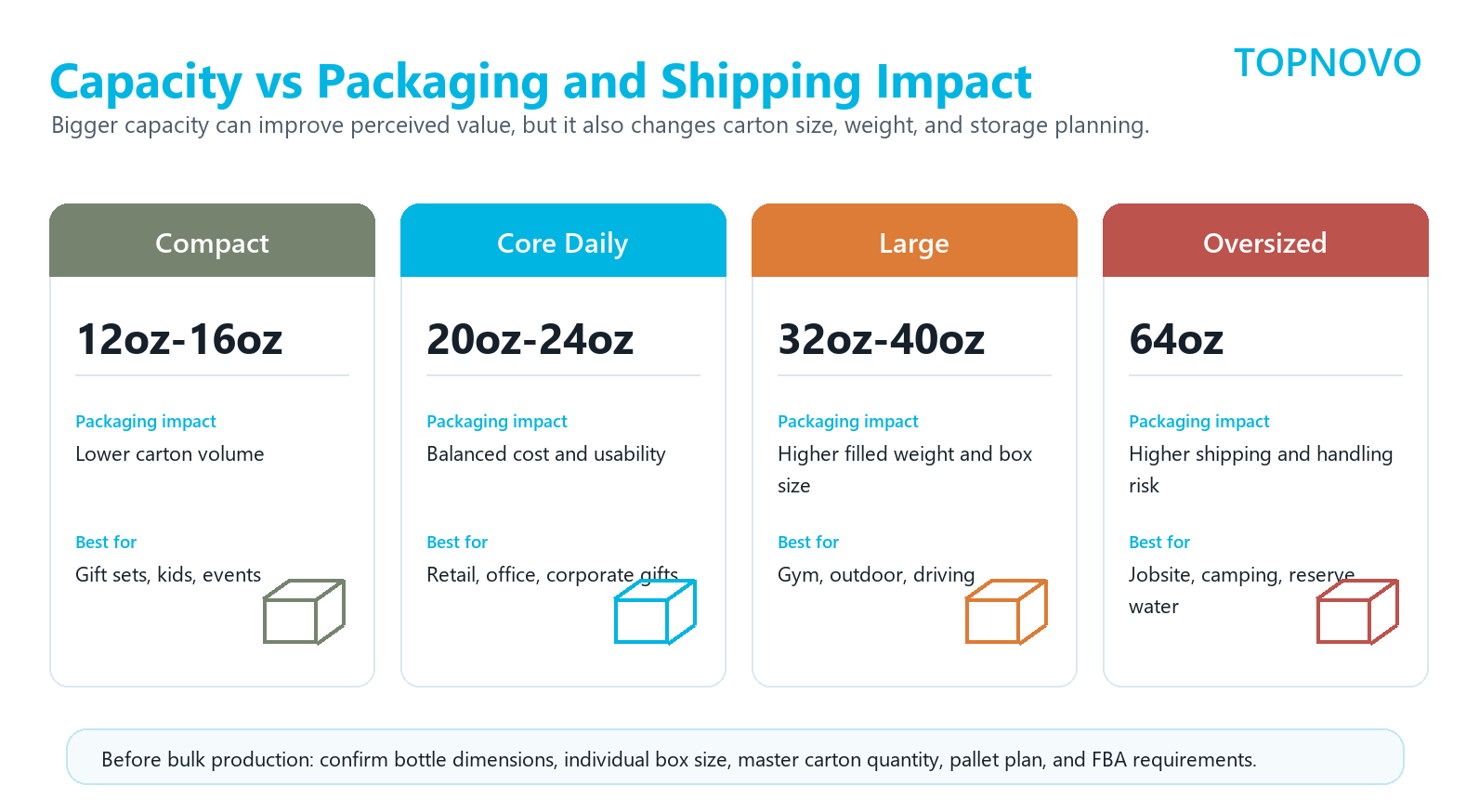
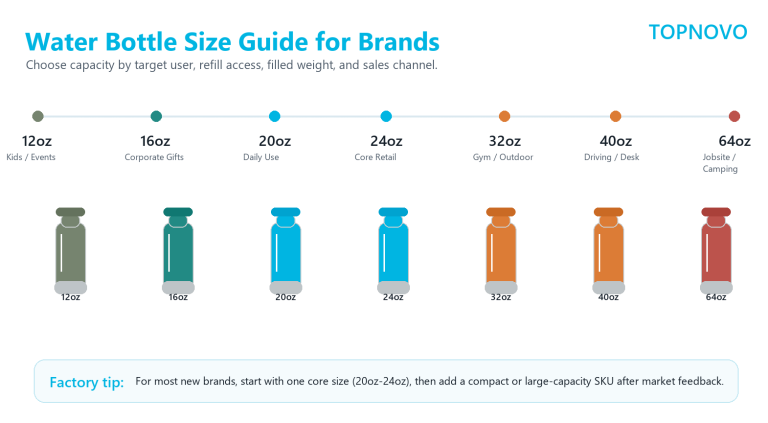
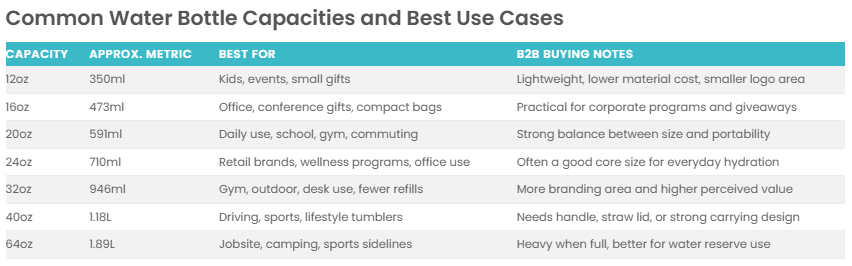
For most water bottle brands, 20oz to 24oz is the safest starting capacity because it balances portability, daily hydration, cup-holder fit, packaging cost, and retail appeal. A 12oz to 16oz bottle works better for kids, corporate gifts, events, and compact bags. A 32oz to 40oz bottle is better for gyms, outdoor use, driving, and large-capacity lifestyle products. A 64oz bottle should usually be positioned for jobsite, camping, sports sideline, or water-reserve use rather than everyday carry.
The right capacity is not simply the biggest size. It depends on your target user, refill habits, filled weight, bottle diameter, lid design, packaging volume, and sales channel.
At Topnovo, we help brands choose the right bottle capacity before sampling and bulk production, so the final product is easier to use, easier to package, and easier to sell.
Why Capacity Is a Brand Decision
When brands develop a custom water bottle, capacity often looks like a simple number: 12oz, 20oz, 24oz, 32oz, 40oz, or 64oz. In reality, that number affects almost every part of the product.
Capacity changes the filled weight, body diameter, lid choice, logo area, packaging size, carton quantity, shipping cost, and customer experience. A bottle that looks attractive when empty may feel too heavy when filled. A bottle with strong visual appeal may still fail if it does not fit a car cup holder or backpack pocket.
A good capacity decision should answer one question: Where will the customer actually use this bottle every day?
Consumer guides such as REI’s water bottle buying guide
Why Capacity Is a Brand Decision
When brands develop a custom water bottle, capacity often looks like a simple number: 12oz, 20oz, 24oz, 32oz, 40oz, or 64oz. In reality, that number affects almost every part of the product.
Capacity changes the filled weight, body diameter, lid choice, logo area, packaging size, carton quantity, shipping cost, and customer experience. A bottle that looks attractive when empty may feel too heavy when filled. A bottle with strong visual appeal may still fail if it does not fit a car cup holder or backpack pocket.
A good capacity decision should answer one question: Where will the customer actually use this bottle every day?
Consumer guides such as REI’s water bottle buying guide